
ETF CFD Trading
Trade over 300 CFDs on Exchange Traded Funds (ETFs) and diversify your investing across stock, index, and sector markets in a single trade.
What is an ETF?
An Exchange-Traded Fund (ETF) is an investment fund that holds a collection of assets – like shares, bonds, or commodities – and is traded on a stock exchange just like a regular stock. An ETF is a way to invest in a wide range of financial assets at the same time, assisting in portfolio diversification without having to buy each asset individually. Investors can earn a return if the value of ETF investments surges or if the ETF pays a dividend.
ETFs pool together money from investors into a basket of different investments. This way, an ETF's performance can reflect the trajectory of a part of the market. Many traders consider ETFs an option for portfolio diversification. The level of diversification an ETF provides depends on the index it tracks.
Mutual funds such as The Vanguard Group, Commonwealth Funds, Morningstar, and BlackRock manage ETFs that are popular among investors in global markets. According to latest market data reports, the ETF industry grew substantially in 2024, with a record US$14.8 trillion assets under management (AUM).

A brief history of ETF trading
ETF trading began in Canada in 1990 with the launch of the Toronto Index Participation Fund, following the stock market crash of 1987, which sparked interest in flexible investment vehicles. Physicist Nate Most, working for the American Stock Exchange (AMEX), was commissioned to develop a new type of asset. He designed the structure for the first US-based Exchange Traded Fund (ETF), aiming to provide investors with a cost-effective and diversified product.
ETFs helped institutional investors execute sophisticated trading strategies more efficiently. They introduced the broader market to pooled investing and trading flexibility. Standard & Poor's Depositary Receipts (SPDR), widely known by its ticker SPY and launched in 1993, remains the world's most heavily traded ETF, with over US$400 billion in assets under management (AUM).
Different types of ETFs

Investor demand and technological progress have played a major role in the increase of ETFs, with the number surpassing 8,000 worldwide. ETFs have drawn the attention of investors seeking to grow their capital without engaging in time consuming asset research.
There are various types of ETFs. Some ETFs invest in a variety of stocks and bonds; others track the performance of a stock index, like the Standard and Poor's E-Mini Index (S&P 500 E-Mini) or the E-Mini (CBOT) Dow Jones Industrial Average (DJIA), while some track the market performance (IBM Index).
Bond ETFs (commonly known as Fixed Income ETFs) are designed to provide exposure to a wide range of available bonds, including US Treasury Bonds, corporate and municipal bonds (munis), international bonds, high-yield bonds, etc.
Bond ETFs are considered lower risk investments when compared to Equity ETFs. Retail investors who are looking for income diversification and institutional investors, such as pension and hedge funds, are two groups that are likely to invest in Bond ETFs.
How does ETF trading work?
An ETF (exchange-traded fund) is a type of investment fund traders buy or sell through a brokerage firm on the stock exchange. In ETF investing, traders do not have to acquire the underlying investment product physically. ETFs are popular financial instruments combining the diversification of mutual funds with the trading flexibility of stocks. ETFs pull together capital from both long-term investors and short-term traders into a basket of various investments, including stocks, bonds, and other security assets.
ETFs work in a similar way to stock trading. ETF issuers, such as financial institutions or fund managers, create funds to track the underlying assets' performance and sell shares to investors participating in the fund. Thus, shareholders own a percentage of the ETF and not the underlying asset included in the fund.
ETF CFD trading allows traders to speculate on the price movements of an ETF without actually owning it. Instead of buying the ETF itself, traders use a contract for difference (CFD) to profit from price changes in either direction—rising or falling. This type of trading often involves leverage, meaning traders can control a larger position with a smaller amount of capital, but it also increases the risk of losses. ETF CFD trading is commonly used by active traders looking to capitalize on short-term market movements.
How to trade CFDs on ETFs?
There are several CFD ETF trading strategies investors and traders can use since ETFs allow trading different investment classes and various sectors.
- Basic strategy.
- Buying a set fixed-dollar amount of an asset on a regular schedule.
- Appropriate for beginner investors.
- Suited for people who can set aside a small portion of their salary each month.
- Alternative to investing in a low-interest saving account.
- Dollar-Cost Averaging imparts discipline to the savings process. You can pay yourself first, which you achieve by saving regularly.
- Accumulate more units when the ETF CFD price is low and fewer units when the ETF CFD price is high, thus averaging out the cost of holdings.
- Focusses on different sectors of the economy.
- Traders rotate into sectors expected to outperform and exit the ones underperforming.
- Risk management tool.
For example, an investor holding a Gold ETF CFD (e.g.,SPDR Gold Shares ETF; ticker GLD) may sell it after a strong performance and rotate into a Technology ETF (e.g., XLK) if they anticipate growth in the tech sector.
How to start trading ETF CFDs with Amber Fund Management?
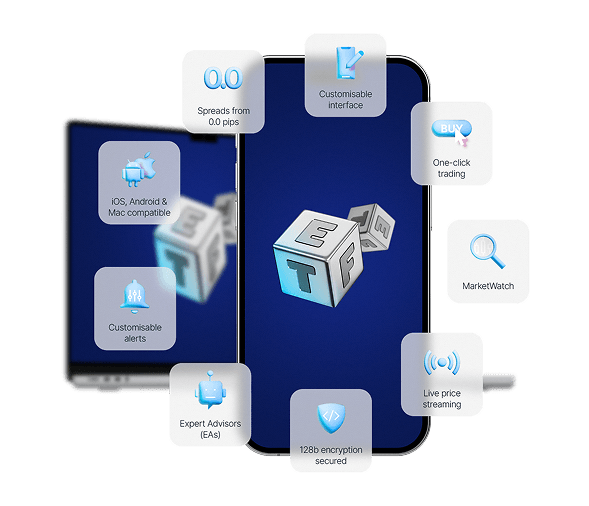
- Open a trading account with Amber Fund Management.
- Do in-depth research about the ETF CFDs you want to invest in and follow their market performance.
- Make a trading plan and decide which ETF CFD suits your financial plan.
- Use your Live trading account to place your trade and monitor your position closely.
- Diversify your investment portfolio to protect your open position from related trading risks.
- Once you reach your goal, close your position.
- Analyse your performance and risks before proceeding with your next trade.
ETF CFD list
| Symbol | Description | Contract Size | Leverage |
|---|---|---|---|
| ACWI | iShares MSCI ACWI ETF (ACWI.xnms) | 1 | 1:5 |
| AGG | iShares Core U.S. Aggregate Bond ETF (AGG.arcx) | 1 | 1:5 |
| BIL | SPDR Bloomberg 1-3 Month T-Bill ETF (BIL.arcx) | 1 | 1:5 |
| BND | Vanguard Total Bond Market ETF (BND.xnms) | 1 | 1:5 |
| BSV | Vanguard Short-Term Bond ETF (BSV.arcx) | 1 | 1:5 |
| DIA | SPDR DJIA ETF (DIA.arcx) | 1 | 1:5 |
| EEM | iShares MSCI Emerging Markets ETF (EEM.arcx) | 1 | 1:5 |
| EFA | iShares MSCI EAFE ETF (EFA.arcx) | 1 | 1:5 |
| GLD | SPDR Gold Shares ETF (GLD.arcx) | 1 | 1:5 |
| HYG | iShares iBoxx High Yield Corp Bond ETF (HYG.arcx) | 1 | 1:5 |
| ICLN | iShares Global Clean Energy ETF (ICLN.xnms) | 1 | 1:5 |
| IEI | iShares 3-7 Year Treasury Bond ETF (IEI.xnms) | 1 | 1:5 |
| IEMG | iShares Core MSCI Emerging Mkts ETF (IEMG.arcx) | 1 | 1:5 |
| IJH | iShares Core S&P Mid-Cap ETF (IJH.arcx) | 1 | 1:5 |
| IJR | iShares Core S&P Small-Cap ETF (IJR.arcx) | 1 | 1:5 |
| ITOT | iShares Core S&P Total US Stocks ETF (ITOT.arcx) | 1 | 1:5 |
| IVV | iShares Core S&P 500 ETF (IVV.arcx) | 1 | 1:5 |
| IVW | iShares S&P 500 Growth ETF (IVW.arcx) | 1 | 1:5 |
| IWD | iShares Russell 1000 Value ETF (IWD.arcx) | 1 | 1:5 |
| IWF | iShares Russell 1000 Growth ETF (IWF.arcx) | 1 | 1:5 |
| IWM | iShares Russell 2000 ETF (IWM.arcx) | 1 | 1:5 |
| LQD | iShares iBoxx IG Corp Bond ETF (LQD.arcx) | 1 | 1:5 |
| QQQ | Invesco QQQ Trust Series 1 ETF (QQQ.xnms) | 1 | 1:5 |
| SHV | iShares Short Treasury Bond ETF (SHV.xnms) | 1 | 1:5 |
| SHY | iShares 1-3 Year Treasury Bond ETF (SHY.xnms) | 1 | 1:5 |
| SPY | SPDR S&P 500 ETF (SPY.arcx) | 1 | 1:5 |
| SUSL | iShares ESG MSCI USA Leaders ETF (SUSL.xnms) | 1 | 1:5 |
| TIP | iShares TIPS Bond ETF (TIP.arcx) | 1 | 1:5 |
| TLT | iShares 20+ Year Treasury Bond ETF (TLT.xnms) | 1 | 1:5 |
| TQQQ | ProShares UltraPro QQQ ETF (TQQQ.xnms) | 1 | 1:5 |
| VB | Vanguard Small-Cap ETF (VB.arcx) | 1 | 1:5 |
| VCIT | Vanguard Intermediate-Term Corporate ETF (VCIT.xnms) | 1 | 1:5 |
| VCSH | Vanguard Short-Term Corp Bond ETF (VCSH.xnms) | 1 | 1:5 |
| VEA | Vanguard FTSE Developed Mkts ETF (VEA.arcx) | 1 | 1:5 |
| VGT | Vanguard Info Tech ETF (VGT.arcx) | 1 | 1:5 |
| VIG | Vanguard Dividend Appreciation ETF (VIG.arcx) | 1 | 1:5 |
| VNQ | Vanguard Real Estate ETF (VNQ.arcx) | 1 | 1:5 |
| VO | Vanguard Mid-Cap ETF (VO.arcx) | 1 | 1:5 |
| VOO | Vanguard S&P 500 ETF (VOO.arcx) | 1 | 1:5 |
| VTI | Vanguard Total Stock Mkt ETF (VTI.arcx) | 1 | 1:5 |
| VTV | Vanguard Value ETF (VTV.arcx) | 1 | 1:5 |
| VWO | Vanguard FTSE Emerging Mkts ETF (VWO.arcx) | 1 | 1:5 |
| VXUS | Vanguard Total International Stock ETF (VXUS.xnms) | 1 | 1:5 |
| VYM | Vanguard High Dividend Yield ETF (VYM.arcx) | 1 | 1:5 |
| XLF | Financial Select Sector SPDR ETF (XLF.arcx) | 1 | 1:5 |
| XLK | Technology Select Sector SPDR ETF (XLK.arcx) | 1 | 1:5 |
ETF CFD Trading - FAQs
An ETF (Exchange-Traded Fund) is a type of investment fund that is traded on a stock exchange. ETFs are passive or, sometimes, active investment products that track the performance of underlying financial assets.
In ETF investing, investors own units of the fund, so they do not have to acquire the investment product physically. ETFs are popular financial instruments combining the diversification of mutual funds with the flexibility of shares. ETFs pull together capital from investors into a basket of various investments, including stocks, bonds, and other asset classes.

Start trading the global markets with a regulated broker
- 800+ CFD instruments
- Cutting-edge trading platforms
- Spreads as low as 0.0 pips
- Easy and quick access to customer support
By registering, you agree to Amber Fund Management' Privacy Policy and consent to receiving marketing materials from Amber Fund Management in the future. You can unsubscribe at any time.